Who are the Amazigh?
The Amazigh, often known as Berbers, are the indigenous people of North Africa, with roots stretching back thousands of years before modern borders even existed. From the rugged Atlas Mountains to the vast Sahara, they’ve maintained a unique language, culture, and identity that has survived empires, colonization, and the tides of history. Proud, resilient, and deeply connected to their land, the Amazigh have a rich heritage of music, art, and traditions that continue to thrive today, reminding the world that their story is far from forgotten.
Amazigh History
Origins (Prehistory)
The Amazigh have roots that stretch deep into prehistory, long before the first written records in North Africa. For tens of thousands of years, their ancestors roamed and thrived across deserts, mountains, and fertile valleys, leaving behind rock art, tools, and ancient settlements that speak to a profound bond with the land. From the Sahara’s early hunter-gatherers to the pioneers of agriculture in lush valleys, these prehistoric Amazigh built the foundations of a culture that would endure through millennia, shaping the landscapes and societies of North Africa long before foreign empires ever arrived..
Numidian Kingdoms
By the first millennium BCE, the Amazigh had established powerful kingdoms in North Africa, most famously the Numidian kingdoms. These states, like Massylii and Masaesyli in what is now Algeria and Tunisia, were known for their skilled cavalry, political diplomacy, and strategic alliances with Mediterranean powers such as Carthage and Rome. Leaders like King Massinissa not only unified tribes but also played pivotal roles in the Punic Wars, shaping the balance of power in the region. The Numidian kingdoms highlight the Amazigh’s early sophistication in governance, warfare, and culture, proving they were more than just observers in history.
Amazigh Empires
After the fall of Roman and Byzantine rule, the Amazigh rose to build powerful empires that left a lasting mark on North Africa. The Almoravids in the 11th century unified much of Morocco, Algeria, and even southern Spain, spreading Islam while creating vibrant trade and learning centers. They were followed by the Almohads, known for their ambitious architecture and reformist vision. The Zayyanids ruled central Maghreb, the Hafsids controlled Tunisia and eastern Algeria, and the Zirids, once Fatimid vassals, became champions of Amazigh culture, cities, and scholarship. These empires show that the Amazigh were far more than tribes.
They built states, shaped politics, and left a cultural legacy that still resonates today.
Resistance & Identity
The Amazigh have never faded quietly into history. For centuries, they resisted foreign domination
Roman, Arab, Ottoman, and French, fighting to protect their land, language, and way of life. From legendary warriors like Queen Kahina, who stood against Arab expansion, to modern movements pushing for Tamazight recognition and cultural rights, Amazigh identity has always been about resilience and pride. Their story isn’t just survival; it’s a living, breathing identity that refuses to be erased.
Map
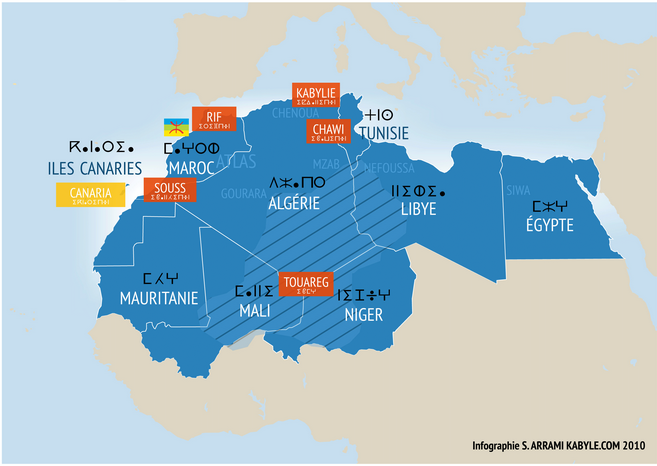
Tamazight
ⵜⴰⵎⴰⵣⵉⵖⵜ ⵣ ⴰⵎⴰⵣⵉⵖ